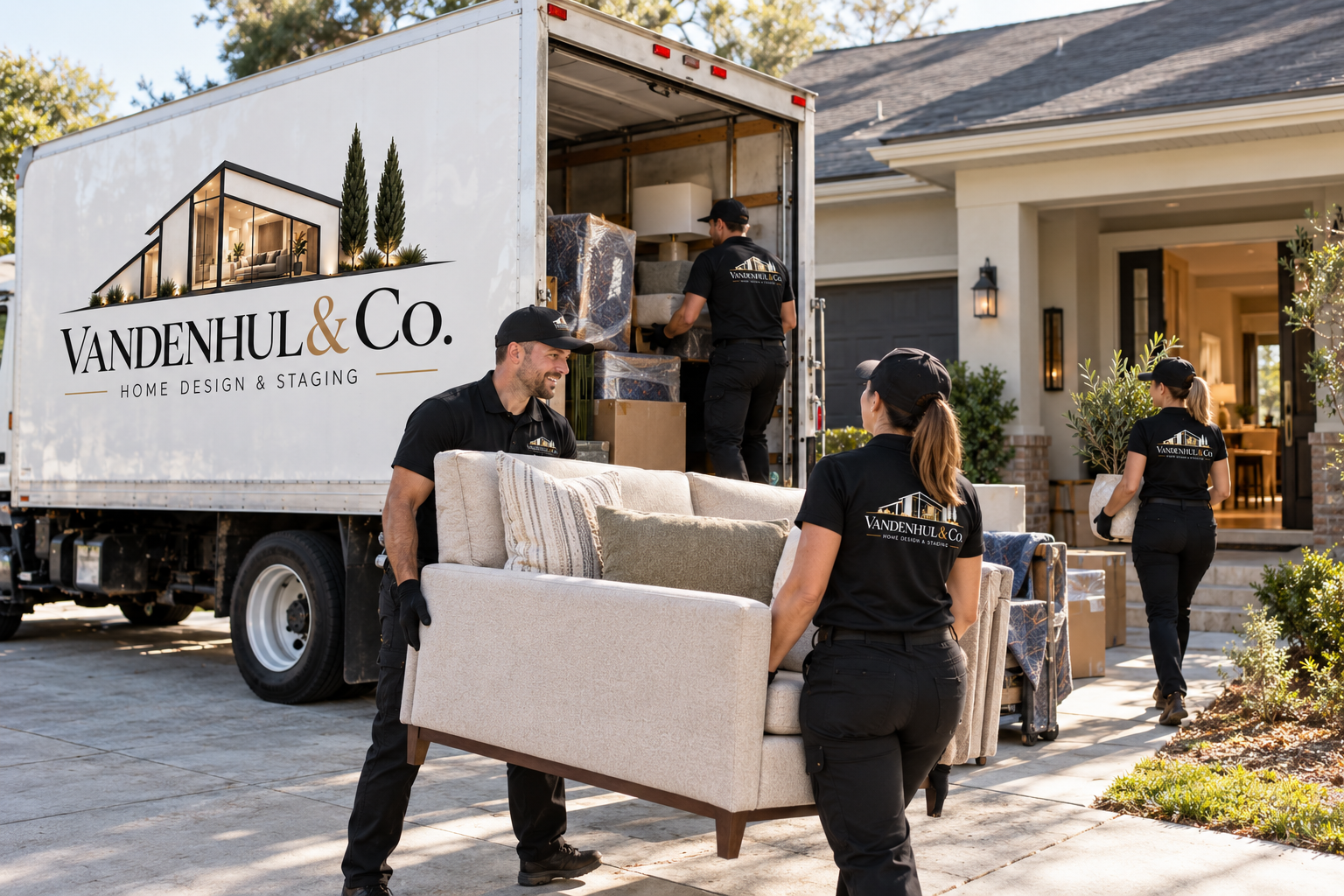
Moving staging inventory and antiques in and out of properties, handled as its own real service, not an afterthought.
Staging furniture and antiques have to get in and out of a property without damage, without delay, and without disrupting the sale. That's a logistics problem, not an afterthought, and it's usually the part sellers and agents think about least, until something goes wrong.
Antique and specialty pieces are especially unforgiving. They were built with materials and joinery that don't respond well to rushed handling, and swings in temperature or humidity during transport can warp panels and loosen joints that took decades to settle. A piece handled carelessly can end up costing far more to repair than it would have cost to move correctly in the first place.
Timing matters just as much as care. Staging day only works if the right pieces arrive in the right order, on the schedule the rest of the project depends on. Treating delivery as its own coordinated step, instead of squeezing it in around everything else, is what keeps the whole project on time.
That's why delivery is priced and scheduled as its own line, not folded into staging. You know exactly what's moving, when, and what it costs, before any of it happens.
Every piece is logged against the plan from your consultation, so nothing gets left behind or mixed up.
Upholstery, hard edges, antique joints, and finishes don't all travel the same way, so they're not treated the same way.
Delivery happens on the timeline the project actually needs, not whenever it's easiest to fit in.
The people who pack it are the people who place it, so nothing changes hands more than it has to.
Before the crew leaves, every piece is positioned and checked against the plan from your consultation.
Delivery is priced as its own transparent line, not folded into staging. Quoted once we know what's moving and where, as part of your consultation.